Everything You Need to Know About Stomach Endoscopy

In many cases, stomach problems begin with mild symptoms that may not seem concerning at first, such as acidity or slight discomfort after eating. However, when these symptoms continue or keep recurring, it becomes important to search for the real cause.
Stomach endoscopy plays an essential role in this process, as it allows the doctor to directly see what is happening inside the stomach and reach a clear and accurate diagnosis without relying on assumptions.
What is Stomach Endoscopy?
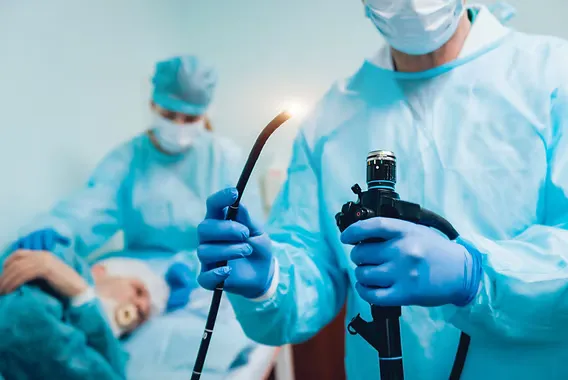
Stomach endoscopy is a medical procedure performed using a thin, flexible tube equipped with a small camera. It is inserted through the mouth until it reaches the stomach.
Through this examination, the doctor can clearly view the lining of the stomach and esophagus, helping to identify the causes of symptoms such as inflammation, ulcers, or any abnormal changes.
What Does a Stomach Endoscope Look Like?
Some people may think the device is large or complicated, but in reality, it is simple and precise.
It consists of a thin, flexible tube with a small camera at its tip that transmits images to a screen. It also includes a light source to ensure a clear view of internal details.
In certain cases, small tools can be used through the scope to take a tissue sample if needed.
How is Stomach Endoscopy Performed?
Many patients wonder how the procedure is done, especially before experiencing it for the first time. It is actually carried out through simple and organized steps, with a focus on patient comfort:
The patient is asked to fast for several hours before the procedure
The throat is numbed to reduce discomfort
A mild sedative may be given to help the patient relax
The scope is gently inserted through the mouth until it reaches the stomach
The doctor carefully examines the stomach lining
Types of Stomach Endoscopy
Stomach endoscopy is not limited to one type. The doctor chooses the most suitable option based on the patient’s condition:
Diagnostic Endoscopy
This is the most common type, used to identify the cause of symptoms by examining the stomach lining and detecting inflammation, ulcers, or other abnormalities.
Therapeutic Endoscopy
In some cases, the procedure is not only for diagnosis. The doctor may treat certain conditions during the same session, such as stopping minor bleeding or addressing specific issues.
Capsule Endoscopy
In this method, the patient swallows a small capsule containing a camera that captures images as it moves through the digestive system. It is useful in certain situations but does not allow for taking samples or performing treatment.
Endoscopy with Ultrasound
This type is used when a deeper examination is needed. It allows the doctor to assess not only the stomach lining but also the surrounding tissues.
Stomach Endoscopy Images
During the procedure, the camera transmits real-time images to a screen. These images clearly show the stomach lining, allowing the doctor to detect any issues with high accuracy.
Is Stomach Endoscopy Painful?
It is normal to feel concerned before the procedure, but stomach endoscopy is generally not painful.
There may be slight discomfort .
Most patients find the experience easier than they expected.
Difference Between Stomach Endoscopy and X-rays
Many people wonder whether endoscopy can be replaced by imaging tests.
X-rays provide a general overview but do not show fine details.
In contrast, stomach endoscopy offers direct visualization of the stomach lining, making it more accurate in diagnosing conditions such as inflammation or ulcers.
For this reason, endoscopy is preferred when a clear and detailed view is required.
Does Stomach Endoscopy Require General Anesthesia?
In most cases, stomach endoscopy does not require general anesthesia.
A local anesthetic is usually applied to the throat, along with a mild sedative to help the patient relax.
General anesthesia is only used in specific situations, depending on the patient’s condition.
When Should You Not Delay a Stomach Endoscopy?
There are certain symptoms that should not be ignored, as they may indicate a condition that requires prompt evaluation, such as:
Severe or persistent stomach pain
Repeated vomiting or vomiting with blood
Difficulty swallowing
Unexplained weight loss
Blood in the stool or changes in its color
In such cases, it is important to consult a doctor without delay.
When is Stomach Endoscopy Recommended?
Doctors may recommend this procedure when symptoms persist or do not respond to treatment, such as:
Ongoing stomach pain
Frequent acidity
Difficulty swallowing
Repeated vomiting
Unexplained weight loss
Tips Before and After Stomach Endoscopy
Before the procedure
Follow fasting instructions as directed
Inform your doctor about any medications
Follow all medical instructions carefully
After the procedure
Rest for a short period
Wait until the effect of the anesthetic wears off before eating
Monitor any unusual symptoms
Frequently Asked Questions
How long does a stomach endoscopy take?
The procedure usually takes about 10 to 20 minutes.
What should I do before a stomach endoscopy?
You should fast before the procedure and inform your doctor about any medications or health conditions.
Are there any side effects after the procedure?
You may experience mild throat discomfort or slight bloating, which usually resolves quickly.
When do I need a stomach endoscopy?
If symptoms persist or keep recurring, the procedure helps determine the exact cause.
Conclusion
Stomach endoscopy is a simple procedure in terms of execution, yet it plays a crucial role in achieving an accurate and clear diagnosis.
By allowing the doctor to directly examine the stomach, it helps identify the real cause of symptoms instead of relying on assumptions.
When performed at the right time, it makes treatment easier and improves the chances of effectively managing the condition while avoiding potential complications.