

Insights & Innovations in Gastrointestinal Care
Learn the difference between gastroscopy and colonoscopy

Have you ever imagined that your digestive system has its own language, constantly trying to tell you something? Gastroscopy and colonoscopy act as the most accurate interpreters of that language. They move you from exhausting guesswork to medical certainty, offering a clear, real-time internal view that can quickly resolve the mystery behind recurring symptoms.
First: What Is Gastroscopy?
Gastroscopy is a medical procedure used to examine the upper part of the digestive system, including:
The esophagus
The stomach
The beginning of the small intestine
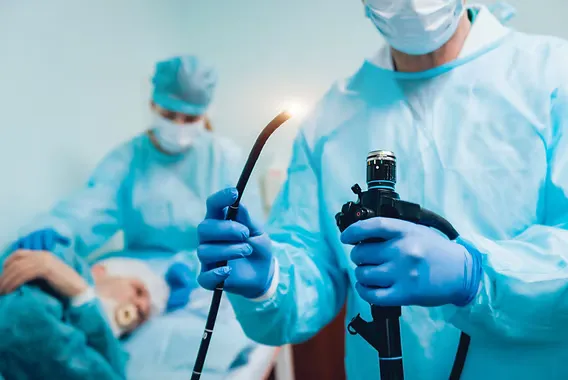
A thin, flexible tube equipped with a small camera is gently inserted through the mouth. This allows the doctor to detect inflammation, ulcers, bleeding, or any abnormal changes with high precision.
When Is Gastroscopy Recommended?
Chronic upper abdominal pain
Persistent acid reflux or heartburn not improving with treatment
Difficulty swallowing
Repeated vomiting
Unexplained anemia
Second: What Is Colonoscopy?
Colonoscopy is a procedure designed to evaluate the colon and rectum from the inside. A flexible scope is inserted through the rectum after proper bowel preparation, allowing a clear view of the lining of the large intestine.
When Is Colonoscopy Recommended?
Rectal bleeding
Changes in bowel habits such as chronic constipation or diarrhea
Unexplained abdominal pain
Monitoring inflammatory bowel conditions
Routine screening for early detection of colon cancer after the age of 45–50
What Is the Difference Between Endoscopy and Traditional Surgery?
Many people wonder whether endoscopy is considered a major surgical procedure like traditional surgery.
In traditional surgery, a relatively large incision is made to reach the organ being examined or treated.
This usually requires a longer recovery time and sometimes several days of hospitalization.
In contrast, gastroscopy and colonoscopy are performed using a thin, flexible camera without any surgical incision.
The scope is inserted through natural openings—through the mouth for gastroscopy and through the rectum for colonoscopy.
This makes the procedure minimally invasive and allows for much faster recovery.
Most endoscopic procedures are performed on the same day, and patients typically leave the medical center after a short observation period, returning to normal activities shortly afterward.
Can Endoscopy Be Both Diagnostic and Therapeutic?
Yes. Gastroscopy and colonoscopy are not limited to diagnosis. During the same session, doctors can:
Take tissue samples (biopsies) for laboratory analysis
Remove colon polyps
Control minor bleeding
Treat certain localized conditions
This often eliminates the need for more invasive surgical procedures.
What About Pain and Sedation?
In most cases, a mild intravenous sedative is used to place the patient in a relaxed and comfortable state without pain.
Some patients may experience temporary bloating after the procedure due to the air introduced during the examination, but this usually resolves within a few hours.
How Should You Prepare?
For gastroscopy: Fasting for 6–8 hours before the procedure is required.
For colonoscopy: Following a special diet and taking a bowel-cleansing solution is necessary to ensure a clear and accurate examination.
Carefully following preparation instructions ensures the most accurate results from the first attempt.
Will I Need to Repeat the Examination?
This depends on the findings.
If results are normal, colonoscopy is typically repeated every 10 years as a preventive screening measure.
If polyps are found, the doctor will recommend a shorter follow-up interval depending on their number and type.
Gastroscopy is repeated only if symptoms persist or based on specific medical findings.
Conclusion
Gastroscopy and colonoscopy are essential diagnostic tools that help detect digestive conditions early and, in many cases, treat them during the same session. Thanks to modern medical advancements, these procedures are safe, quick, and comfortable for most patients.
Taking care of your digestive health may begin with a simple step—and that step could be an endoscopic examination.